Designing an onboarding experience that proves value before the first real call
An agentic AI B2B platform for sales teams that captures, analyzes, and acts on every call Numoloo
Sole Product Designer
Embedded with product, engineering, and design
8 weeks
0-to-1 Product design from concept to launch
Freelance
UX
UI
Challenge: Help users understand the value of Numoloo before they had real call data
Outcome: Shipped an interactive first-time experience using sample data, with launch metrics defined to test whether it improved activation
I designed Numoloo's first-time experience around a simple problem: users could not fully understand the product until call data existed. Instead of relying on tours and empty states alone, I used sample data to let them experience the core workflow before their first real call.
Activation & Adoption
TTV & Dropoff
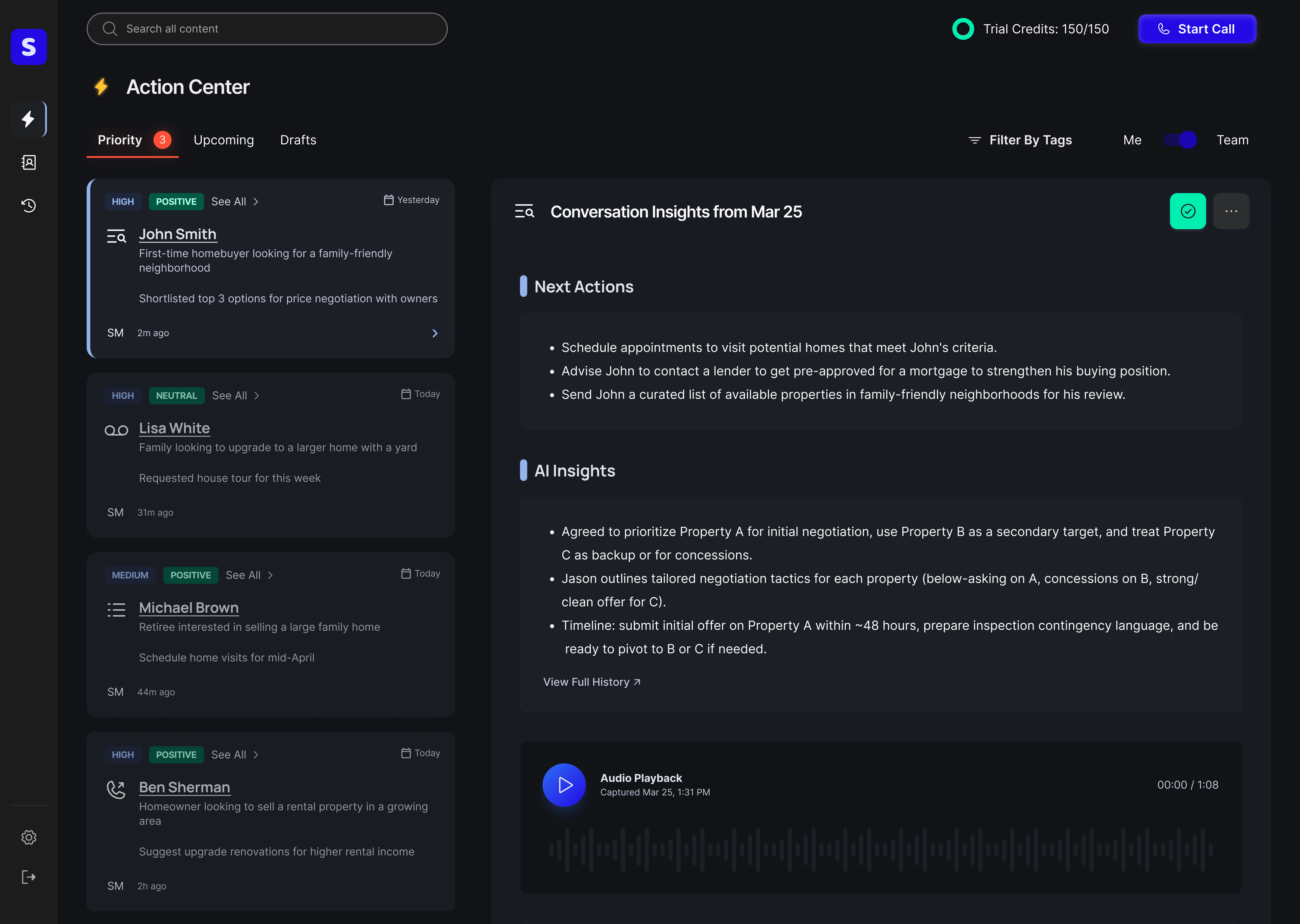
A tour could explain the product, but it could not prove the value
Numoloo captures sales calls, analyzes what happened, and turns those insights into follow-up actions. The challenge was that a new user could not see much of that value until real call data started coming in.
A product tour could show where things lived, and empty states could explain what each area would eventually do. But both still asked users to imagine the experience. I wanted the first session to give them something concrete to work with.
That shifted the onboarding goal from explaining features to helping users reach a believable first value moment as quickly as possible.
Fit the AI into a workflow users already understood
The founder brought more than 20 years of sales experience and a clear view of how small sales teams already worked: take a call, review what happened, follow up, move on to the next conversation. Asking users to learn a completely new process just to use AI would add friction before the product had earned their trust.
I used that existing rhythm as the backbone of the experience. Numoloo would still feel like receiving a call, reviewing a summary, and acting on a follow-up. The AI would handle the work that was easy to miss or postpone, rather than asking users to adopt an entirely different way of selling.
The gap became obvious while we were designing the product
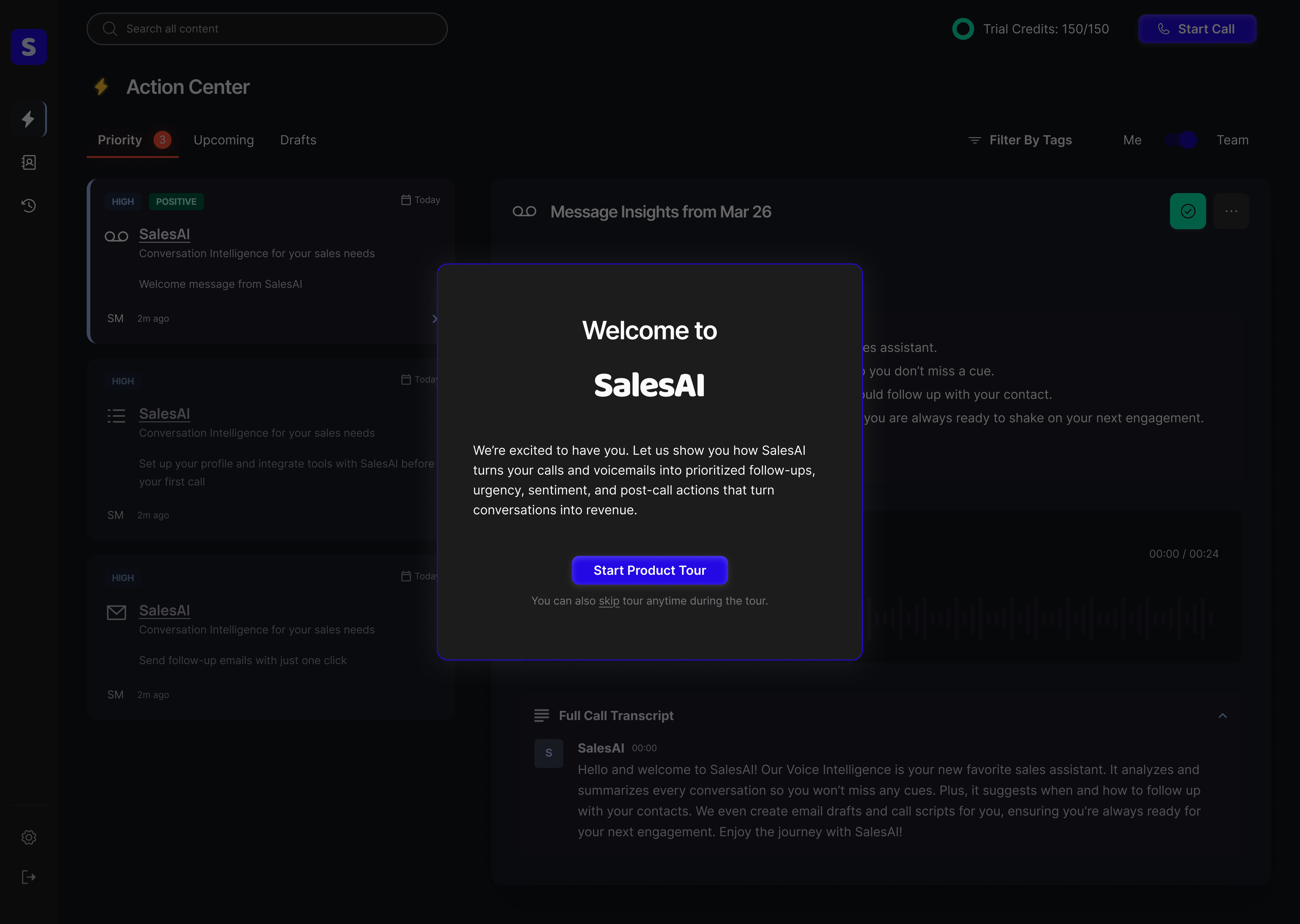
A product tour and empty states were already part of the onboarding plan. They were useful for orientation, but they still left the main question unanswered: what does this actually feel like when Numoloo is working for me?
That problem showed up while I was designing the in-use screens. Without realistic call data on the page, even conversations with the client became harder because too much of the experience had to be imagined. It was a good signal that first-time users would face the same problem.
Rather than add more explanation, I started exploring how we could let users experience the product before their own data existed.
We could have shipped the tour and empty states first and waited for usage data. Instead, I treated the lack of real data as a product problem we could address in the first release.
Give users something real to try before their own data existed
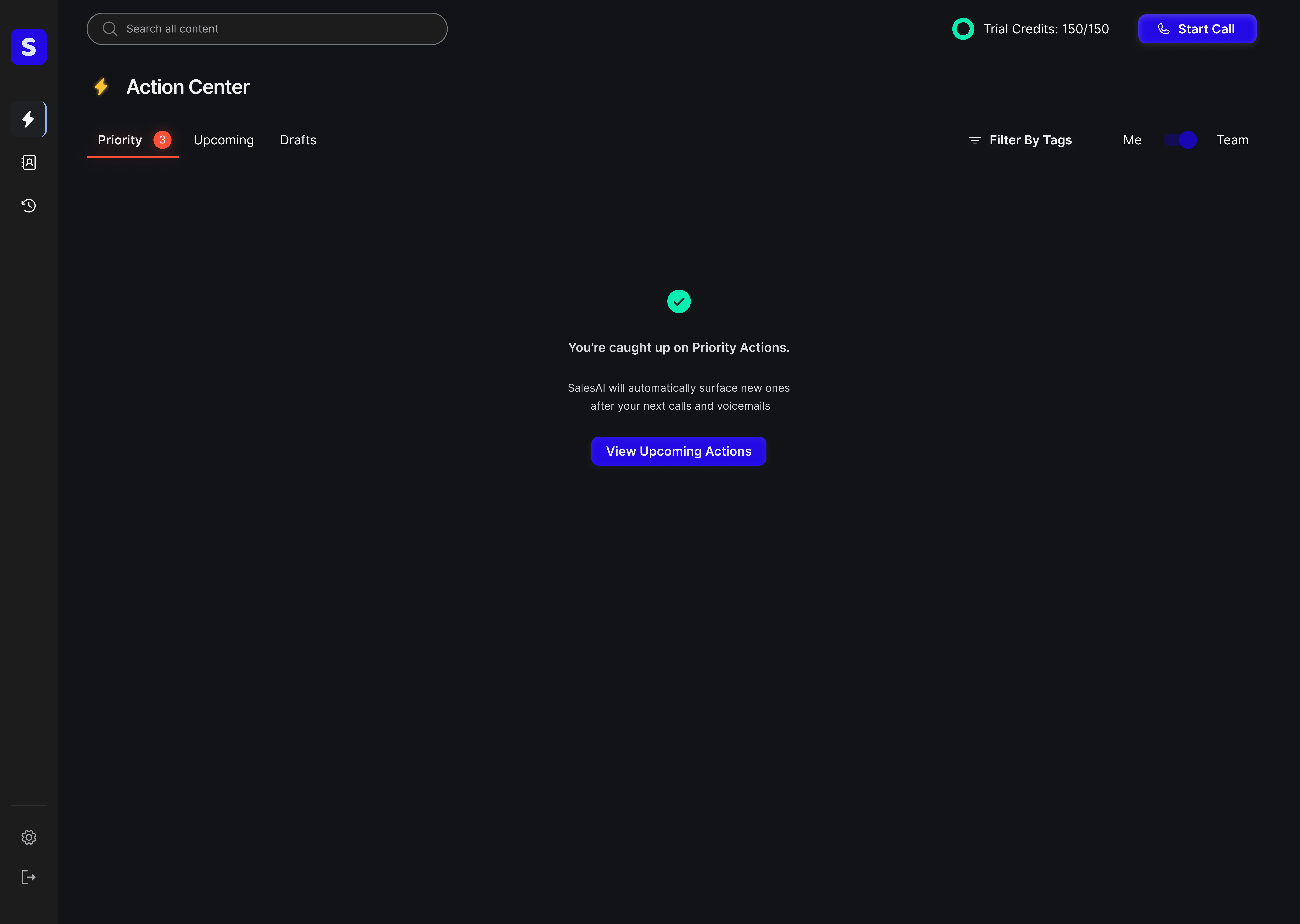
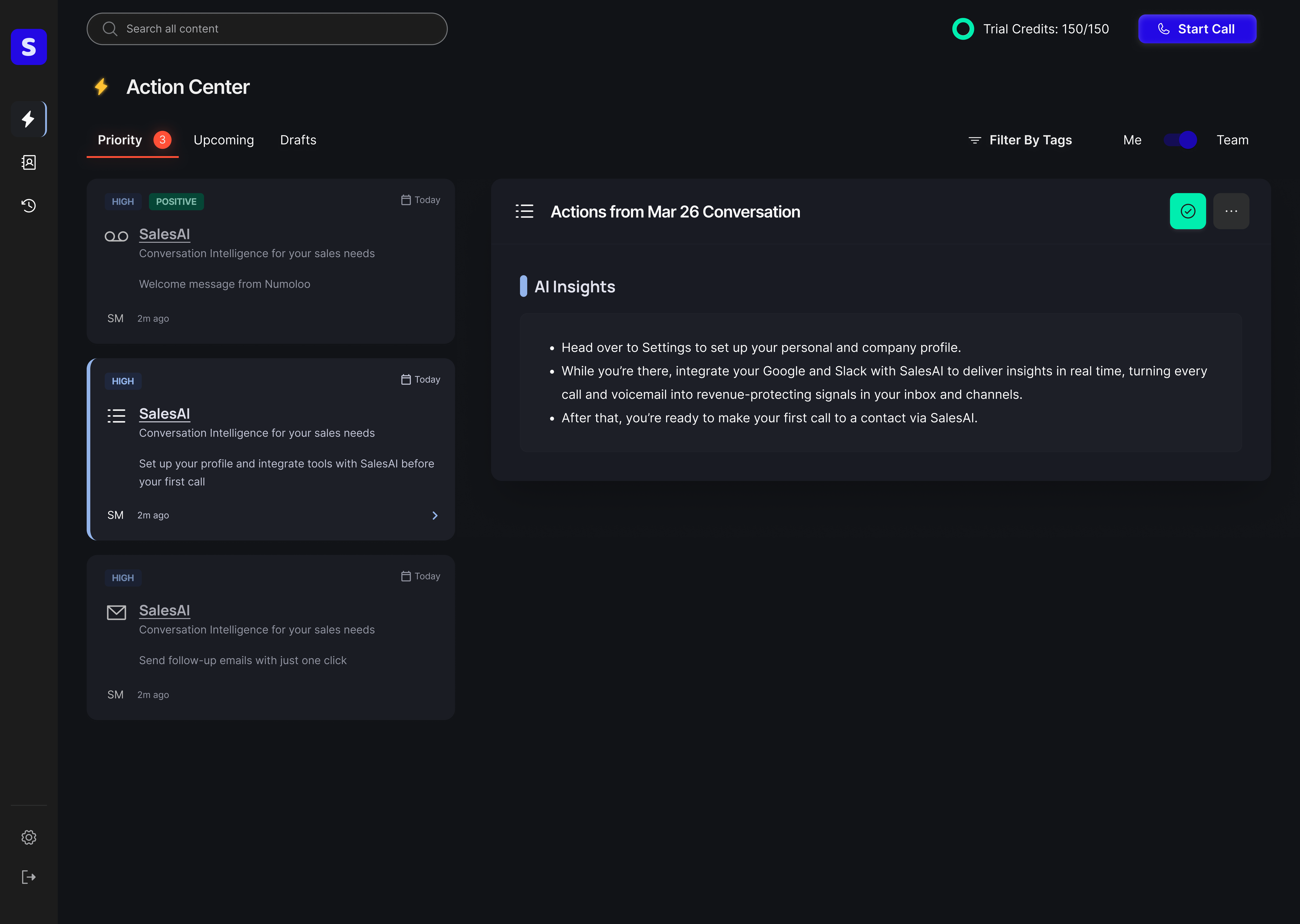
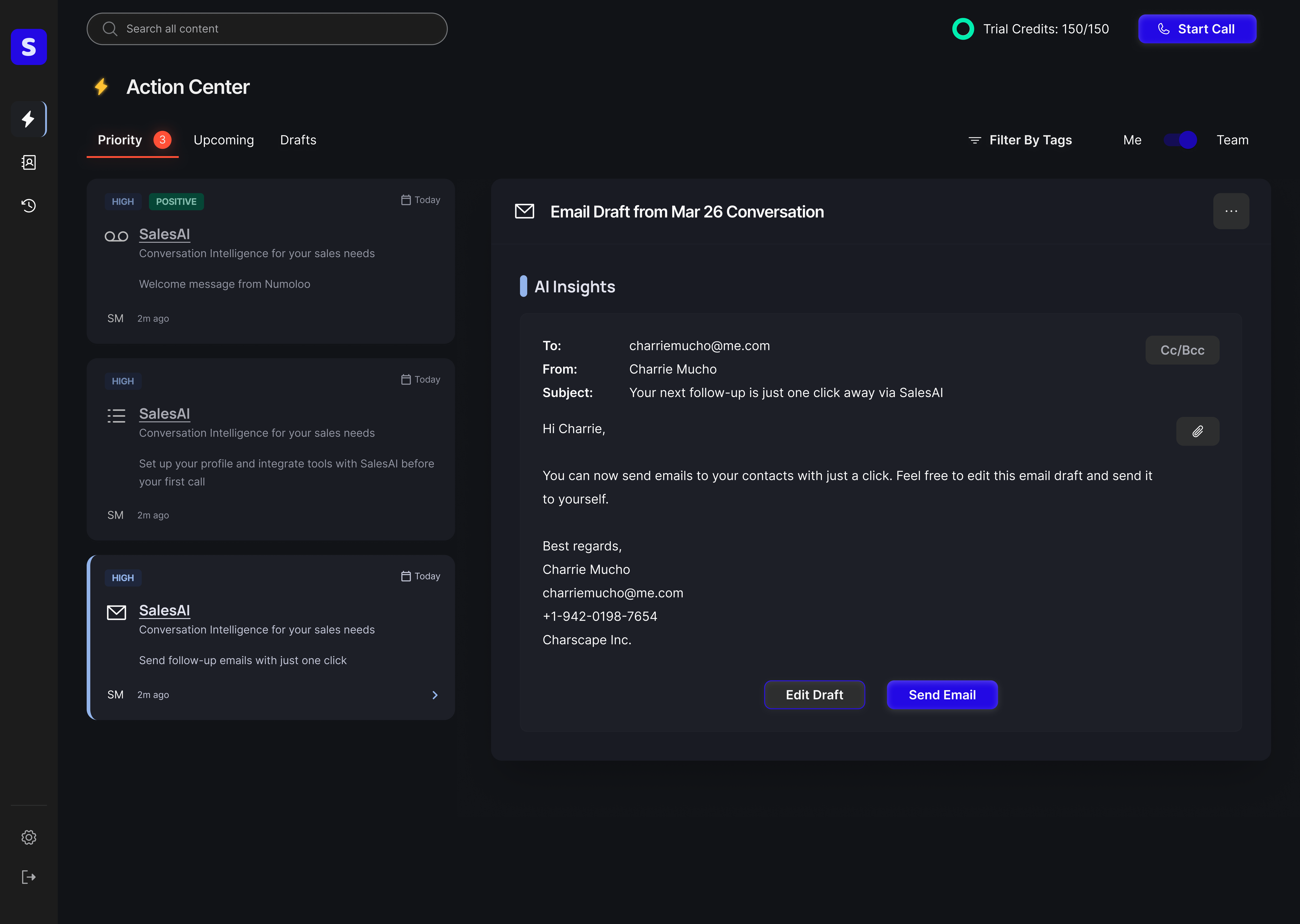
I replaced the initial empty-state experience with three interactive cards built around sample data. The goal was to let users try the main workflow instead of asking them to picture it.
I chose three moments that together showed the product loop: understand an AI-generated call summary, connect Gmail and Slack so Numoloo could act on insights, and try a ready-to-send follow-up email.
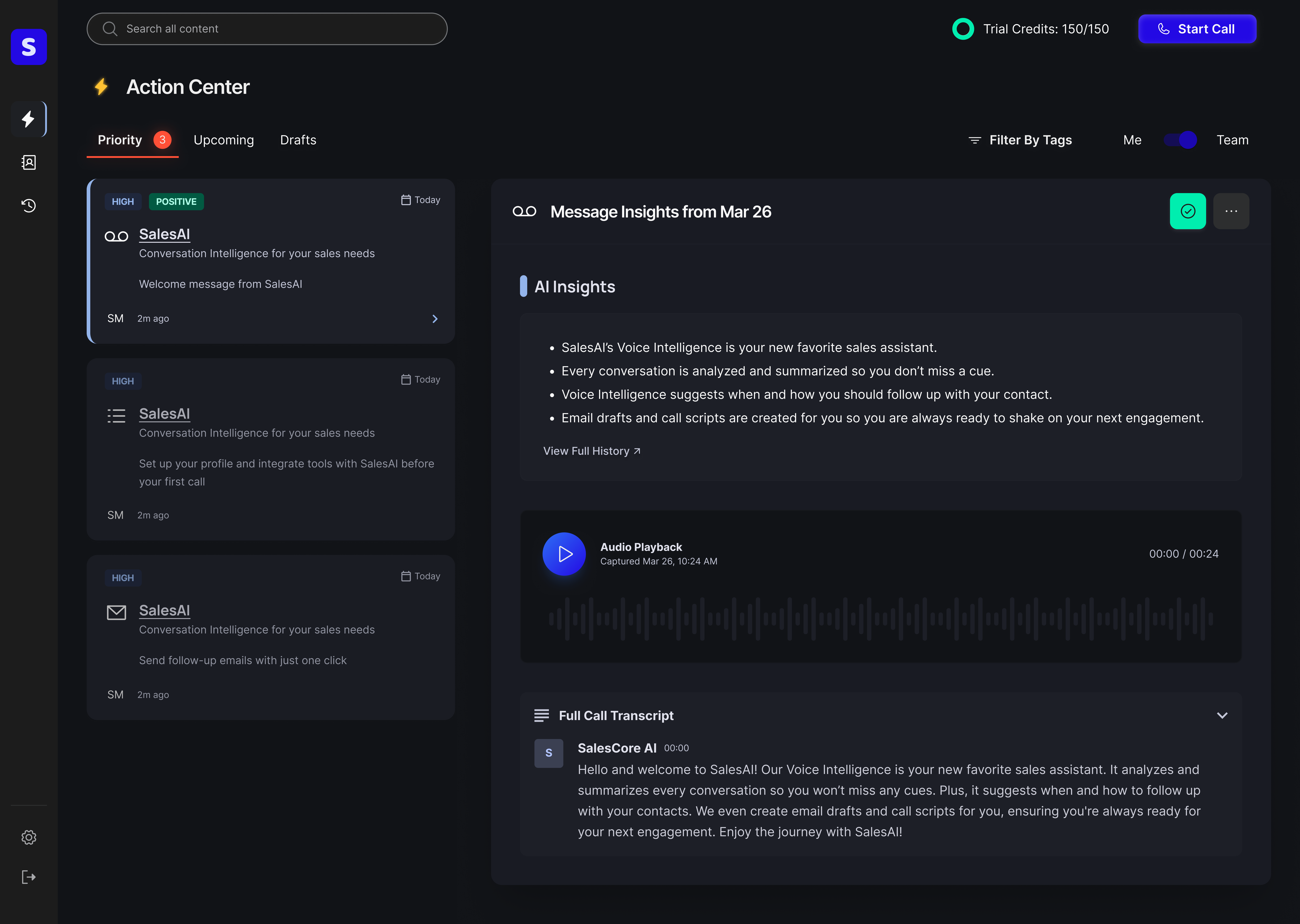
Once users finished the demo, they entered the real product with a better sense of what would happen when their first call arrived and which actions they could take next.
The sequence became: orient users with the tour, let them try the workflow with sample data, then move them into the real product.
What we planned to measure after launch
The working hypothesis was that users who experienced the core workflow with sample data would be more likely to activate than users who only saw a product tour.
The primary signals were demo completion and whether users who completed it activated at a higher rate. I also defined time to first real action, Gmail and Slack connection rates, and return rate after the first AI-assisted call as supporting measures.
The product launched before there was enough usage data to make that comparison, so I kept the outcome honest: the experience shipped, the measurement plan was in place, and the next step was to see whether the onboarding change actually improved activation.