Making the structural call before the product had a spec
Lightweight, rapid simulation software and knowledge base that turbocharges innovation in optical metalenses Simple Metalens
Product Designer
Collaborated with Founder-Developer
8 weeks
0-to-1 Product design from concept to launch
Freelance
UX
UI
Challenge: Give the founder's expanding feature list a structure that wouldn't break down as scope grew
Outcome: Shipped SMD PRO as version 1.0.0 with a modular structure built to scale
Before SMD PRO was scoped, I proposed splitting the product into three focused modules instead of growing the existing single-view tool further. That structural call became the foundation for Simulate, Analyze, and Build.
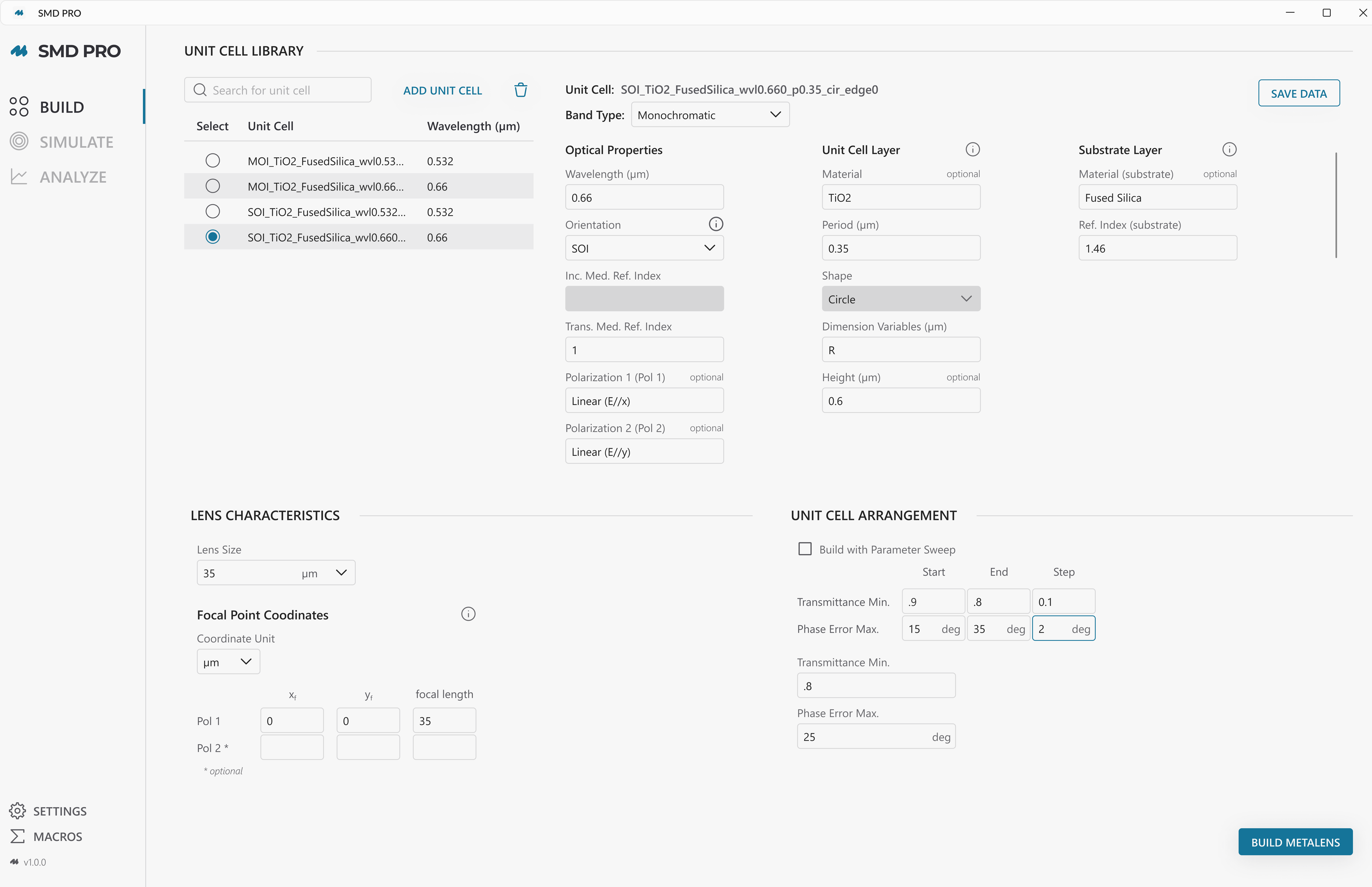
A single view was already straining before SMD PRO existed
Simple Metalens had a lightweight tool that proved engineers needed a faster way to design optical metalenses. It was a single, flat view, and it worked at first. But as features got added, everything competed for the same space with no natural place for new capability to live.
That was the signal. The product needed a different structure before it could support the deeper workflows Simple Metalens was planning next.
Proposing the structure before the product was scoped
Before SMD PRO was formally scoped, I proposed splitting the product into separate modules instead of continuing to grow the existing single view. This wasn't a requirement the founder handed me. It came from watching where the original tool was already breaking down, and I shared the direction with the founder ahead of the engagement, before requirements were finalized.
It became the shared starting point we built from. The founder brought deep domain expertise and a growing set of feature ideas, my job was to hold the structure firm as those ideas came in, not just organize them after the fact.
Mapping the structure to how engineers actually work
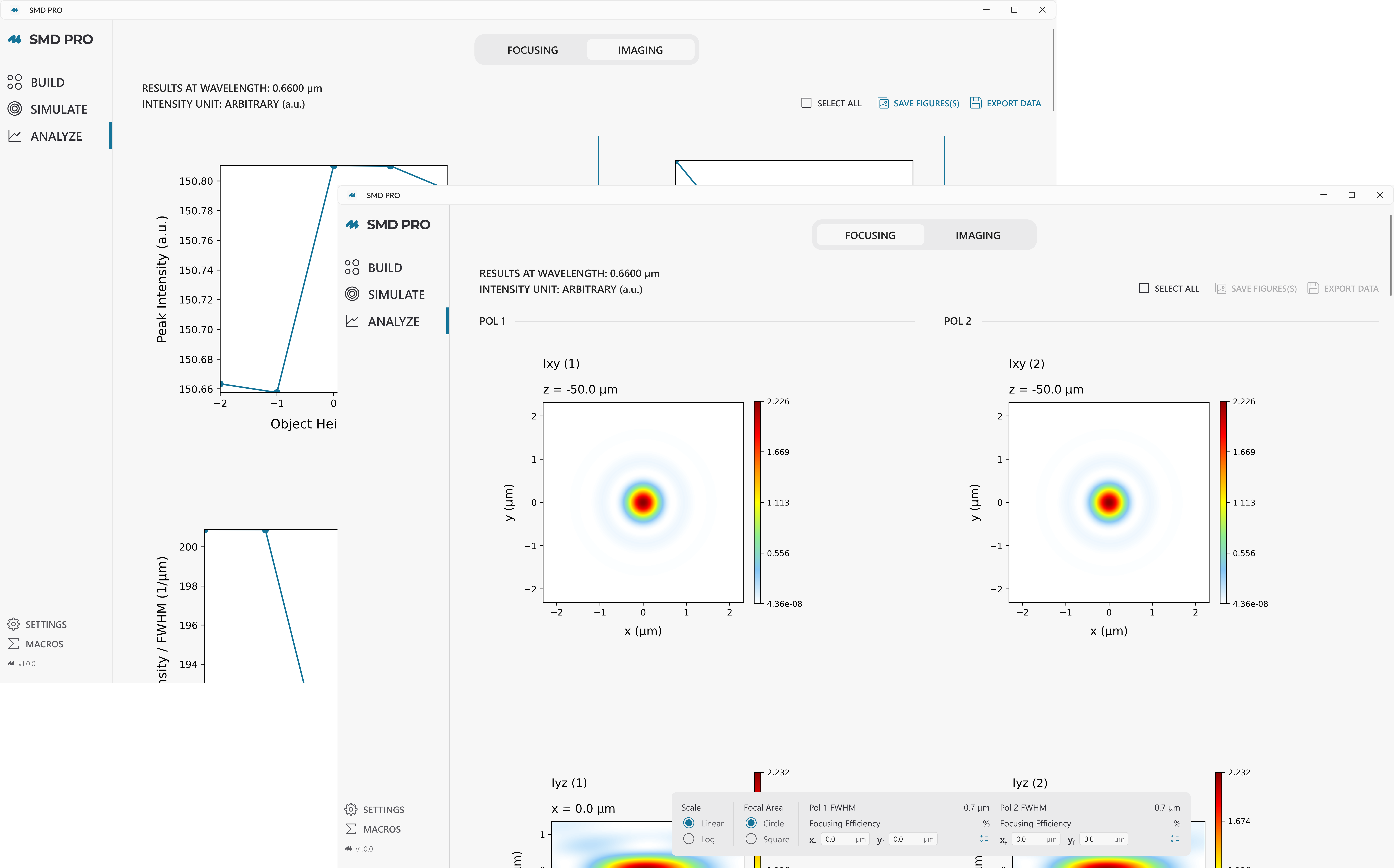
The engineering workflow gave the modules their order: simulate, analyze, then prepare for fabrication. I structured the product around that sequence, Simulate → Analyze → Build.
Each module focuses on one stage, reducing context switching and making the system easier to navigate and extend as new features came in.
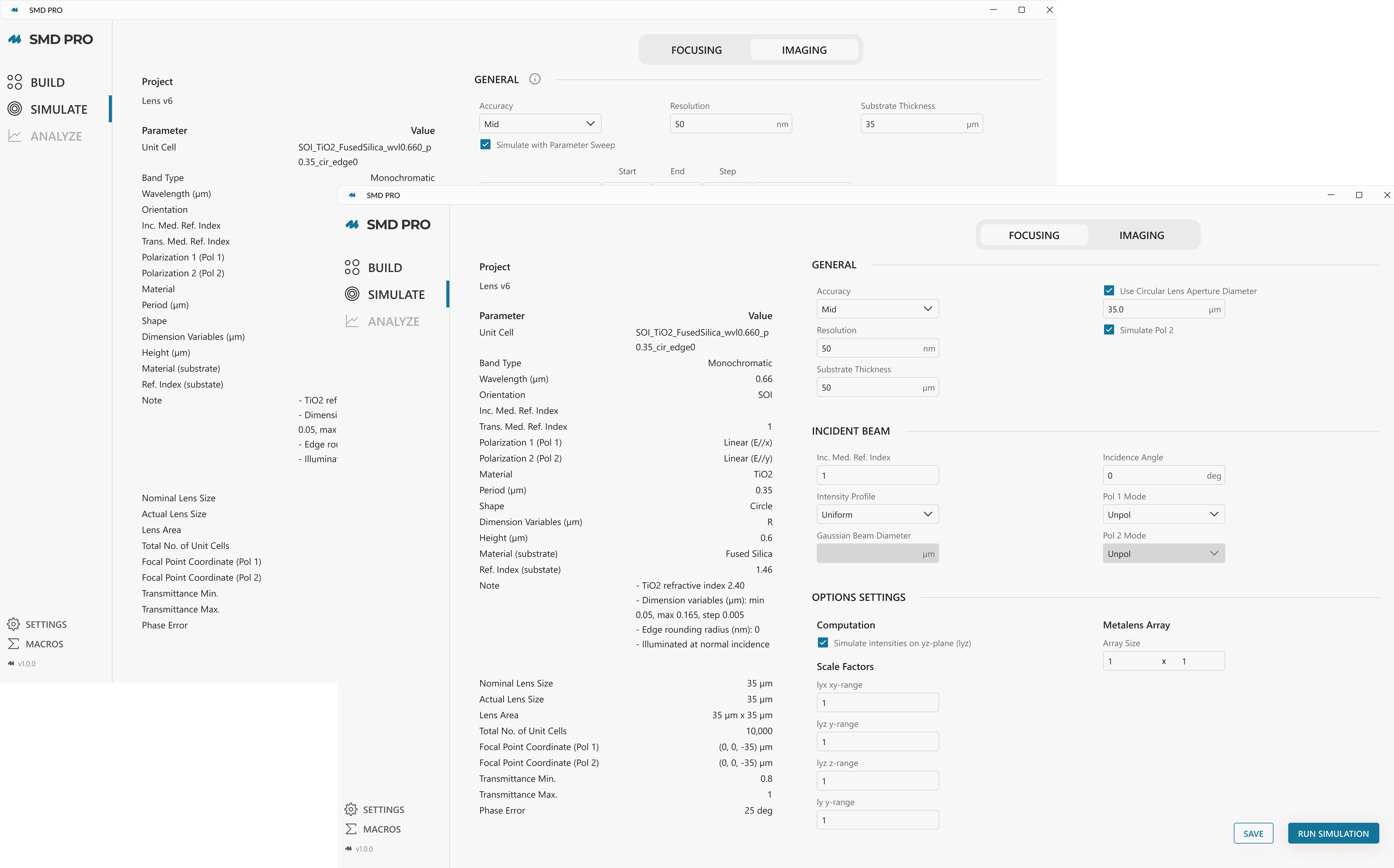
Three modules, one system, one focus at a time
Surfacing everything at once would have created cognitive load at every stage. Engineers needed one module at a time, not every option competing for attention.
I designed persistent sidebar navigation, separating Simulate, Analyze, and Build into clear product areas while keeping a single workflow.
This gave each module dedicated space for its controls and outputs, and created a structure that could support future features without added complexity.
A system designed to scale
The product required reusable patterns, not just visual consistency.
I designed the system in Figma from wireframes to final UI and built a component library for shared elements across modules. This allowed each area to evolve independently while staying consistent.
It also gave the founder a practical implementation foundation, where new ideas could map to existing patterns instead of creating new interaction models.
Shipping a focused first version
Not every feature belonged in v1. As new ideas emerged over the eight-week engagement, the founder and I worked through what was essential for launch and what should move to the roadmap.
The goal was a focused product built around the core Simulate, Analyze, and Build workflow, without overloading the first release.
SMD PRO launched to customers as version 1.0.0. The modular structure held through every scope change in the engagement. The founder can add new capability to any module without redesigning the product around it. That was the goal from the first conversation.